
Journalist · Editor · Trainer
Rashad Abdelqader
I turn complex realities into stories people finish — and show other writers how it is done.
Twenty years inside six Arabic newsrooms — Al Arabiya, MBC, Approach, HuffPost Arabic, ArabicPost and Arta — including two I helped shape before they launched, and a fifty-person newsroom under me at ArabicPost.
Berlin · info@almuharir.net · LinkedIn
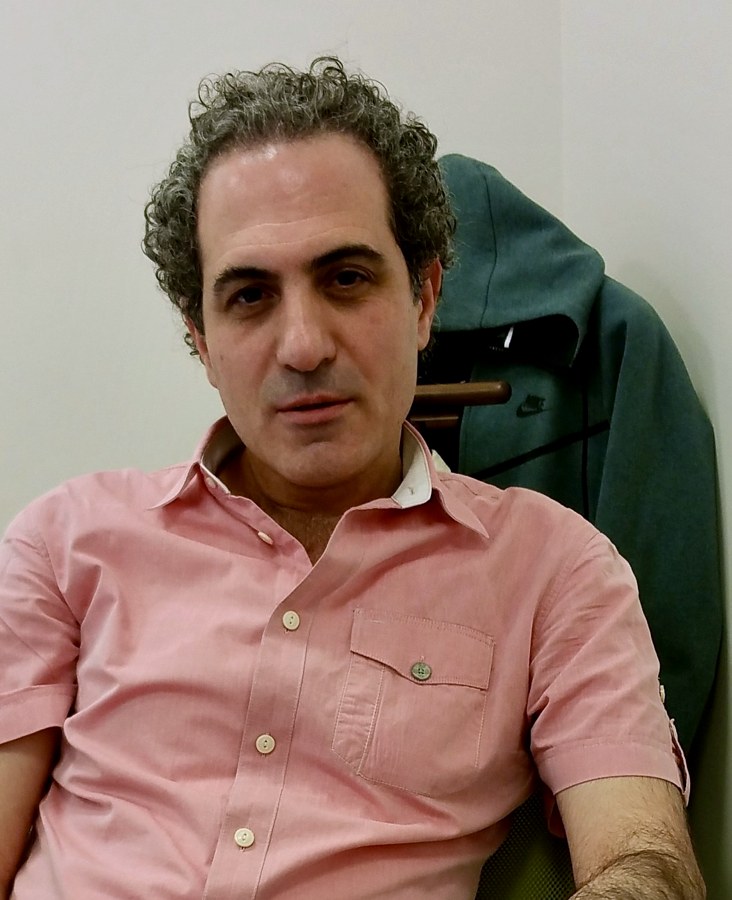
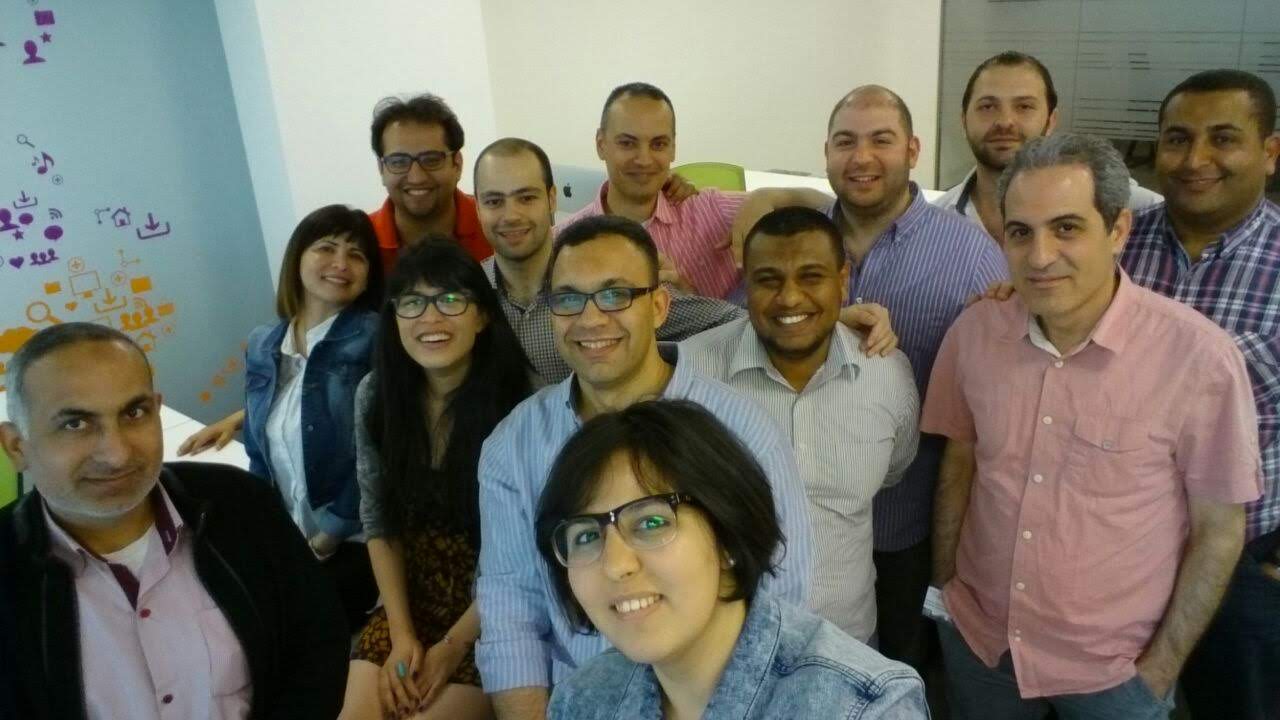
A newsroom I helped build — with the people who built it.
20
years in Arabic newsrooms
6
Arabic newsrooms worked in
50+
journalists led at ArabicPost
4
languages — Arabic and Kurdish native, English, German
2
books on the craft, free to read
3
Arabic trainer’s manuals
15
module course, open to anyone
30
close readings published
Reporting, writing, training
01
The reporting is the part I keep coming back to
After twenty years mostly at a desk, the thing that still interests me most is the reporting itself — finding the person who actually knows, and getting them to talk.
Most of what goes wrong in a story goes wrong before any of it is written: a source nobody called back, a number nobody traced to its origin, a quote that says less the second time you read it. Those are the things I look for first, in my own work and in other people’s.
Some subjects are harder to report than others — conflict, displacement, people who have lost a great deal. I am careful with those, and I think about what a question costs the person answering it.
02
Readable, without making it smaller
Taking a complicated subject and writing it so an ordinary reader finishes it — without throwing away anything true to get there.
This is the work I care about most. Two books on how narrative actually functions, a fifteen-module course open to anyone, thirty close readings that take other writers’ paragraphs apart until the technique shows. I did not write them from theory. I wrote them from twenty years of editing other people’s sentences under deadline.
The same hand works on someone else’s text. Structure first — what the opening promises and whether the ending pays it — then down to the sentence, where most of the damage is. I would rather cut a paragraph I like than keep one the reader will not finish.
And it is Arabic that reads as Arabic, not English thought in Arabic words. I have translated Culler, Garber, Said and Fairclough into it, which is the hardest test of that there is.
“It has been a very long time since I read a text that took me with it — for its beauty and for the knowledge in it.”
“One of the Syrian Kurds — and Syrians generally — who makes me feel creative merely by reading his exquisite texts.”
03
I would rather hand the method over than keep it
I run workshops and clinics for journalists, and what I know is not capital I hold on to.
Both books are free to read, the course is open with no registration, the close readings are published. None of it sits behind anything.
I design and deliver training on conflict-sensitive reporting, trauma-informed interviewing and hate speech, and I wrote the Arabic manuals it is taught from. I keep notes on how each session goes — evaluations, a report at the end of every cycle — because I would rather find out early that something is not landing.
“What Rashad Abdelqader has been writing on Facebook is a precious treasure for journalists. I knew him years ago as my manager — he was a fine teacher and mentor, and still is, with his abundant knowledge and his great humility.”
“Rashad Abdelqader laboured over this book for years. It is among the most important publications of the Al Jazeera Institute, and a real addition in the field of writing.”
The writing
A question I have been working on for years
What makes an Arabic sentence good? Al-Jurjani asked it a thousand years ago and complained that everyone before him had gestured at the answer — hinted, alluded, admired — without ever explaining or proving it. I don’t think that door is closed.
Arabic and Kurdish are both native to me, but Arabic is the one I came to second — through school and television, to its literature later, and to al-Jurjani later still, wishing I had started there. Learning it that way made me examine choices a more intuitive writer might make without ever having to explain them. It is the reason I can tell a writer what is wrong with a paragraph instead of silently rewriting it. Almuharir is where that work is published: not a blog, but an editorial project on writing, journalism, language and knowledge.
From what I’ve read
Thirty close readings. A strong passage by another writer, taken apart to show what is actually working in it.
From what I’ve learned
Essays on how sentences hold together, on building a story, and on what writing has to do with thinking.
From what I’ve written
Reported long-form and narrative non-fiction, including work on Kurdish history, identity and the region.
Tell me what you are working on
A newsroom you are starting. A team whose writing you want to be better. A piece that is not working and you cannot say why. A book, a course, a translation — or something that is not on this page at all.
A few lines are enough to begin. If you already know what you need and when you need it, say so and we can get straight to it; if you do not yet, that is usually the more interesting conversation.
info@almuharir.netThe record
Experience
MiCT — Bridge Syria
International Trainer · Berlin
I design and deliver training on conflict-sensitive journalism, trauma-informed reporting, hate speech and interviewing survivors, and review co-produced work against Do No Harm as an operational standard.
Independent
Editor, trainer and media consultant · Berlin
I split my time between writing, editing, and teaching. On any given week I’m shaping long-form pieces, refining translation workflows, and coaching reporters through structure, voice, and verification. The same craft sits behind my two books and behind Almuharir.net, which I built as a home for practical tools and clear editorial thinking.
Arta for Media & Development
Head of Innovation · Syria
I helped a dispersed local team reimagine how service journalism could meet people where they are. We turned newsroom routines into lightweight playbooks, piloted explainers and audio briefs, and taught editors to pair narrative clarity with safety and verification — so urgent information could move fast and still be trusted.
ArabicPost
Executive Editor · Istanbul
I was part of the team that shaped it before launch, then led a large, multi-disciplinary newsroom through a mobile-first transformation. We treated story formats like products — interactives, explainers, social-native packages — and aligned daily output to measurable editorial goals without losing voice or ambition.
HuffPost Arabic
Managing Editor · Istanbul
I was in the room through the pre-launch decisions, and then lived the grind and the choreography: daily line-ups, commissioning, and the constant negotiation between speed and depth. I built schedules and style standards that helped a distributed team file clean, consistent work under pressure.
APPROACH (YAAB FZ LLC)
Online Executive Producer · Dubai
I moved between launches — news, culture, government — writing the playbooks, shaping tone, and standing up the editorial systems each project needed to sustain itself after day one.
MBC Group
Editorial Manager · Dubai
Here I learned to turn deadlines into teamwork. Multiple cities, multiple shifts, and one online desk: my job was to keep the machine human — clear roles, cleaner processes, and a shared sense of what “good” looks like.
AlArabiya.net
Senior Journalist · Duty Editor · Dubai
My foundation, on the founding editorial team. I lived on the 24/7 desk, filing, editing, mentoring across shifts, and discovering that the only way to move fast is to think clearly. The habits stuck.
Teaching
Training and workshops
How to Tell a Story
Arc, beats, pacing, voice, audience payoff. Structuring complex topics into clear narrative arcs, and pitching on angle, evidence and audience.
Storytelling Writing Tools
Practical edits from idea to sentence to published piece, using a repeatable editing checklist for clarity and impact.
Custom newsroom clinics
Headlines that travel, explainers that stick, visual briefs that work — and using analytics to refine topics, formats and distribution.
Published
Books and translations
How to Tell a Story
ISBN 978-3-00-082996-3
A practical guide to storytelling, in fifteen chapters, with a self-paced course open to anyone.
Storytelling Writing Tools
Al Jazeera Media Institute
A practical guide to self-editing. Readable in full on this site.
Jonathan Culler, Literary Theory: A Very Short Introduction · Marjorie Garber, Quotation Marks · Edward Said, Invention, Memory and Place · Norman Fairclough, Discourse as Social Practice
Also
Education, skills and languages
Education
BA in English Literature, Damascus University.
High Qualification Diploma, Damascus University.
Languages
Arabic — native
Kurdish — native
English — fluent
German — B2
Skills
Editing and story design · long-form and explainers · audience development · SEO and distribution · analytics (GA4, GSC, Looker Studio) · CMS and workflow design · scriptwriting for audio and video · team coaching · multilingual publishing